Photocatalytic degradation of cefoperazone using TiO₂ and ZnO under different irradiation conditions
DOI:
https://doi.org/10.59783/aire.2026.103Keywords:
photolysis, photocatalysis, pharmaceutical analysis, cefoperazone, nanomaterials, H₂O₂Abstract
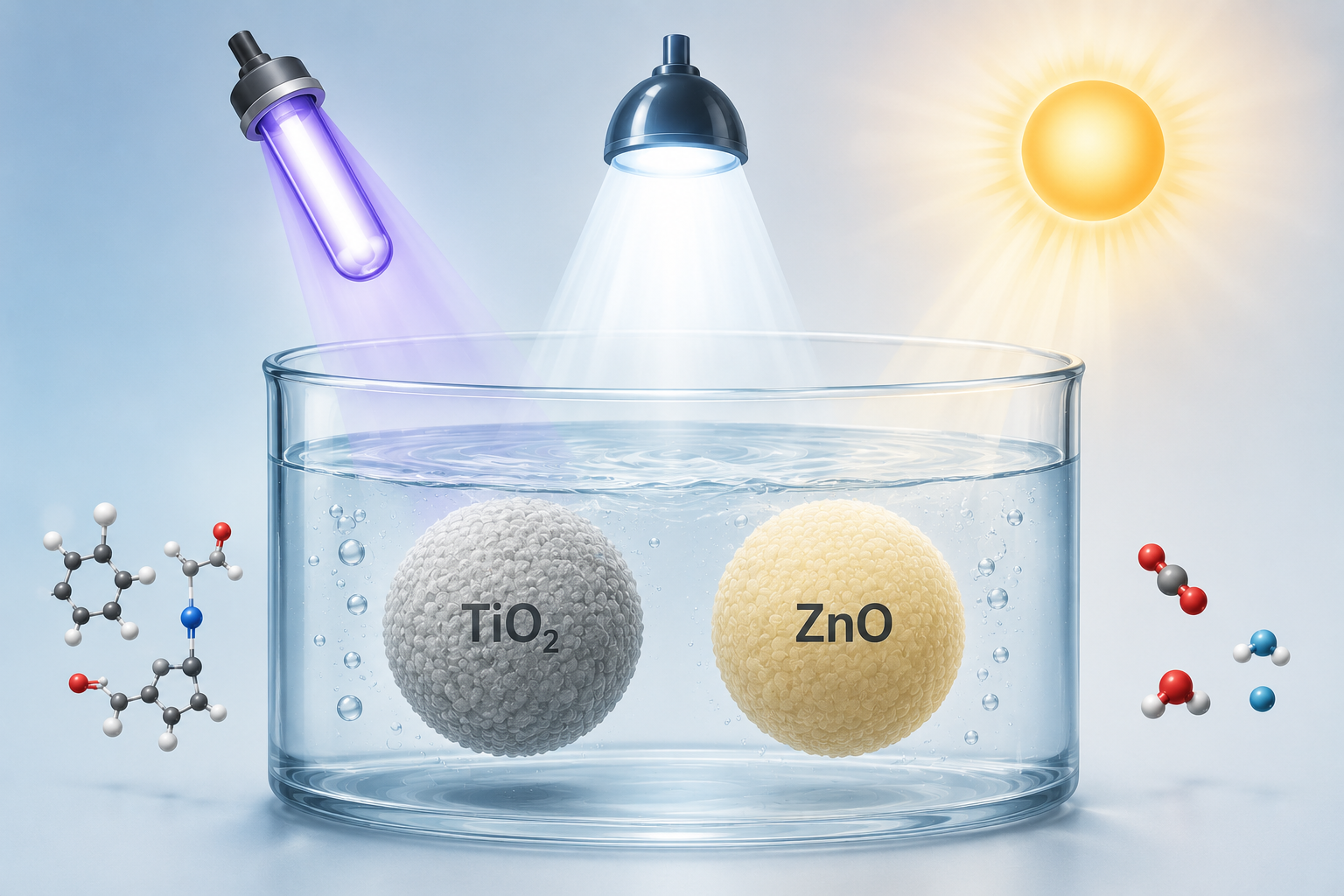
The increasing environmental concern regarding water pollution has necessitated the development of effective remediation strategies, particularly addressing pharmaceutical contaminants such as cefoperazone. One promising approach involves heterogeneous photocatalysis, a process where semiconductor materials such as TiO2 and ZnO are employed to facilitate the degradation of organic pollutants under UV or visible light irradiation. In this study, the photolytic and photocatalytic degradation of cefoperazone was investigated under different irradiation types, wherein the applied TiO2 and ZnO nanomaterials showed significant efficiency in removing cefoperazone compared to direct photolysis. Furthermore, the addition of H₂O₂ enhanced the degradation efficiency of cefoperazone. The dual focus on TiO2 and ZnO photocatalysts offers a robust solution to mitigate antibiotic pollution in aquatic environments and imposes future trends in environmental sustainability.
Published
How to Cite
Issue
Section
Categories
License
Copyright (c) 2026 AIDASCO Reviews

This work is licensed under a Creative Commons Attribution-NonCommercial-NoDerivatives 4.0 International License.

